
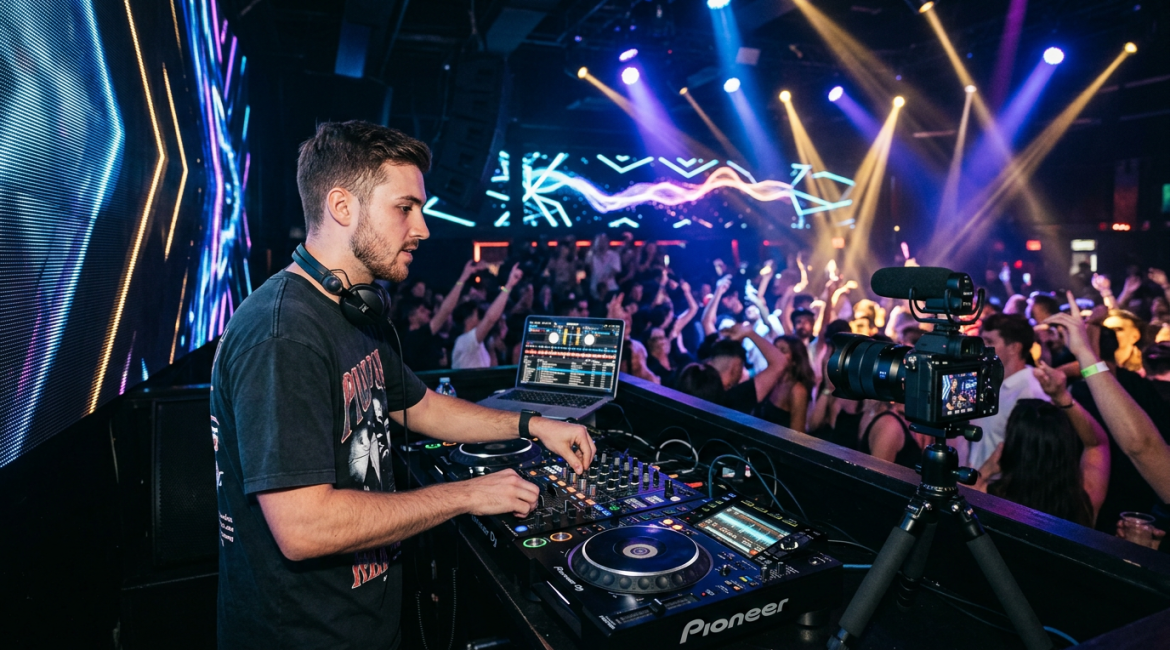
Content-first DJ branding drives gig bookings by leveraging short-form video, studio clips, and live streaming to build trust and social proof. Unlike static promo kits, these dynamic formats provide real-time evidence of a DJ’s technical skill and crowd-reading abilities, resulting in higher engagement rates and direct inquiries from event planners and venue owners.
Why is content-first branding more effective than a traditional electronic press kit (EPK)?
Content-first branding offers authentic, real-time proof of a DJ’s performance ability and personality, which static PDFs and old photos cannot convey. Modern talent buyers and wedding couples prioritize seeing how a DJ interacts with a live audience before they commit to a booking.
For decades, the standard for the music industry was the Electronic Press Kit (EPK). This usually consisted of a professional headshot, a written biography, a few SoundCloud links, and a list of previous venues. While these elements still have a place, they are no longer the primary driver of new business. In a competitive market, a static document feels curated and distant. In contrast, content-first branding is active and transparent.
Venues and event planners are looking for risk mitigation. When they see a video of a DJ successfully managing a transition or reading a dance floor, the risk of a “bad hire” decreases significantly. Short-form content provides the social proof necessary to close a deal without a long back-and-forth email chain.
How does short-form video increase DJ visibility on social media?
Short-form videos on platforms like TikTok and Instagram Reels use discovery algorithms to show DJ content to users who do not yet follow the artist. These 15-to-60-second clips reach high-intent organizers by appearing in location-based feeds and music-specific interest groups.
To maximize visibility, DJs should focus on these three video types:
- The “Transition” Clip: Showing the technical skill of mixing two tracks seamlessly.
- The “Crowd Reaction”: Capturing the moment a drop hits and the energy of the room shifts.
- The “Gear Setup”: A time-lapse of the equipment setup process, showing professionalism and technical readiness.
Data suggests that video content on Instagram generates up to 1200% more shares than text and image content combined. For a mobile DJ or club resident, one viral transition clip can lead to dozens of inquiries within a 48-hour window.
What role do behind-the-scenes studio clips play in building authority?
Behind-the-scenes studio clips demonstrate a DJ’s deep musical knowledge and commitment to their craft beyond just playing records. Showing the process of track selection, crate digging, or music production builds an image of a professional expert rather than a hobbyist.
Clients are often willing to pay a premium for a DJ who is a “curator.” When a DJ shares clips of themselves preparing a custom edit for a wedding or organizing their library for a corporate gala, they demonstrate a level of preparation that justifies higher fees. This “work-in-progress” content humanizes the brand, making the DJ more relatable and approachable to potential clients.
Studio clips also serve as evergreen content. While a live gig video might only happen once a week, a DJ can film several studio snippets in a single afternoon, providing a steady stream of content that keeps their brand at the top of their followers’ feeds.
Can live streaming actually lead to physical gig bookings?
Live streaming serves as a virtual audition that allows event planners to observe a DJ’s performance style and technical consistency for extended periods. Platforms like Twitch and Mixcloud Live enable DJs to showcase their ability to maintain energy and flow, which is a critical requirement for long-form event bookings.
A live stream removes the “filter” of editing. When a corporate event planner watches a DJ perform a two-hour set online, they gain confidence in that DJ’s ability to handle a four-hour holiday party. Streaming also allows for real-time interaction, where a DJ can answer questions or take requests, demonstrating the communication skills needed for high-stakes private events.
Many DJs now include their streaming schedule in their email signatures. This allows potential clients to “stop by” and see the DJ in action before signing a contract. It acts as a continuous, interactive portfolio that is updated every time the “Go Live” button is pressed.
How can DJs transition from a traditional EPK to a content-first strategy?
DJs can transition by documenting their daily musical activities rather than waiting for a “perfect” moment to film a high-production promo video. Shifting the focus to consistent, raw, and authentic captures ensures a steady flow of marketing material that resonates with modern audiences.
A content-first strategy requires three simple steps to start:
- Capture everything: Mount a smartphone on a tripod during every practice session and every gig.
- Edit for impact: Use simple mobile apps to cut videos down to the most exciting 30 seconds.
- Post with purpose: Include a clear call-to-action in every caption, such as “Booking for Summer 2024 – link in bio.”
By prioritizing content that shows the DJ in motion, the brand becomes a living entity. This approach turns a social media profile into a 24/7 sales representative that works harder and more effectively than a traditional paper or digital resume ever could.
Frequently asked questions
Why is video more important than a professional bio?
A professional bio describes what a DJ does, but video proves it. Event planners prioritize visual evidence of talent and crowd engagement over written accolades because it provides immediate proof of performance quality and reduces the perceived risk of hiring an unknown artist.
How often should a DJ post video content to get more gigs?
DJs should aim to post short-form video content at least three times per week to stay relevant in social media algorithms. Consistency keeps the DJ at the top of mind for event organizers, ensuring the brand appears when a client begins their search for talent.
Do I need expensive camera equipment to start content-first branding?
Expensive equipment is not necessary because modern smartphones provide high-definition video suitable for Instagram, TikTok, and YouTube. Audio quality is more important; using a simple interface to record the mixer output directly into the phone ensures the music sounds professional regardless of the camera used.
What is the most effective type of video for getting booked?
The most effective video is a “high-energy transition” clip that shows the DJ successfully changing the mood of a room. This type of content demonstrates technical proficiency, music selection skills, and the ability to control a crowd, which are the primary factors clients look for.
How do I track if my content is actually driving bookings?
DJs can track booking sources by adding a “How did you hear about us?” field to their website inquiry forms. Monitoring link clicks in social media bios and direct messages (DMs) provides clear data on which specific videos or streams are converting viewers into paying clients.