
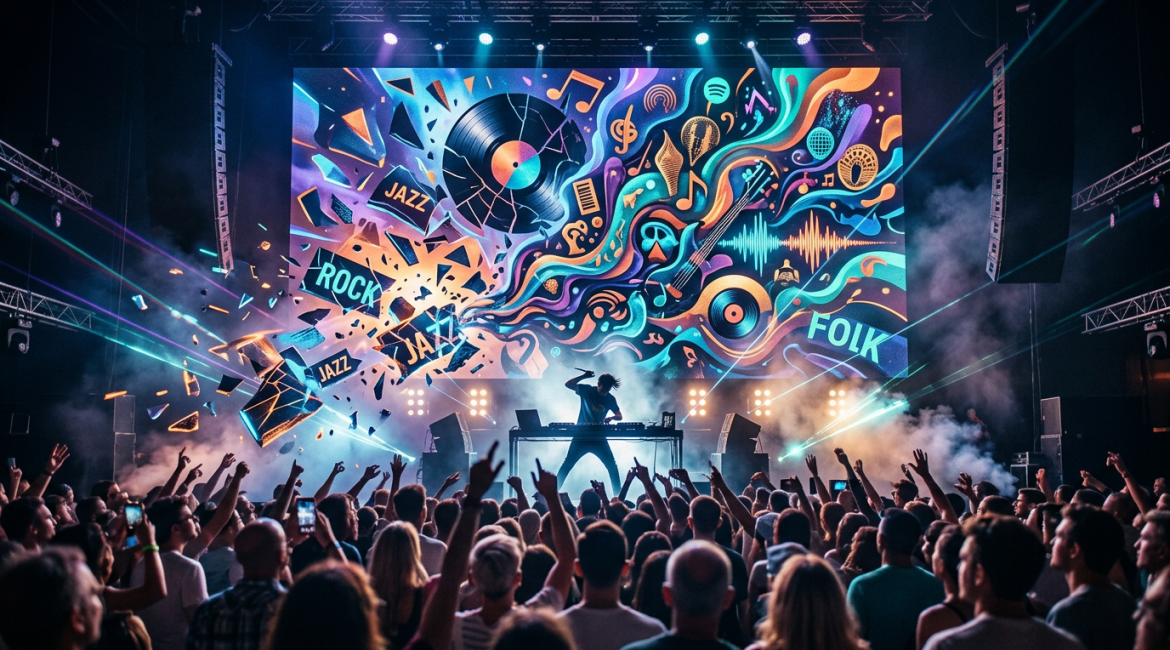
For decades, the music industry was built on silos. You were a techno DJ, a house head, a trance purist, or a drum and bass specialist. Record stores were organized by strict dividers, and festival stages were curated with surgical precision to ensure one sound never bled into the other. But walk into a cutting-edge underground club in Berlin, London, or New York today, and you’ll hear something entirely different: everything.
The walls are coming down. We are witnessing the death of rigid genres, replaced by a new era of “genre-agnostic” curation. For modern festival bookers and underground club promoters, the goal is no longer to find a master of one style, but a storyteller who can navigate the entire spectrum of electronic and experimental music. Here is why genre-agnosticism is winning and how it is reshaping the business of nightlife.
The Rise of the ‘Selector’ Culture
In the past, a DJ was often hired for their ability to maintain a consistent “vibe” or BPM for four hours. Today, the most sought-after artists are “selectors.” These are performers who prioritize mood, energy, and narrative over a specific sub-genre label. They might start a set with ambient textures, jump into 90s breakbeat, slide into psychedelic techno, and close with a high-energy pop edit.
This shift isn’t just a trend; it’s a reflection of how the modern consumer listens to music. Thanks to streaming platforms and algorithmic discovery, the average listener’s “Daily Mix” is inherently genre-fluid. A fan who listens to Charli XCX is likely just as comfortable listening to industrial techno or UK garage. Curation that reflects this diverse palate feels more authentic to the modern experience.
Why Modern Bookers are Moving Away from Labels
From a business and branding perspective, booking genre-agnostic talent offers several strategic advantages for venues and festivals:
- Broader Demographic Appeal: By moving away from hyper-niche genre lineups, festivals can attract a more diverse crowd. A lineup that blends genres encourages cross-pollination between different fanbases, leading to higher ticket sales and a more vibrant atmosphere.
- Increased Resilience to Trends: Genres go in and out of fashion. A club that brands itself solely as a “Dubstep Club” risks obsolescence when the hype cycles move on. A club that brands itself on high-quality, adventurous curation remains relevant regardless of what the “sound of the month” is.
- Higher Engagement and ‘Shazam’ Moments: When a DJ plays a predictable set within one genre, the audience often goes into a trance-like state. While that has its place, genre-agnostic sets keep the audience on their toes. Unexpected transitions create “moments” that get talked about on social media and keep dancers engaged for longer sets.
The “Vibe” as the New North Star
If genre is no longer the organizing principle, what is? For modern bookers, it’s the aesthetic or energy. Instead of asking “Is this artist techno?”, they ask “Does this artist fit the dark, industrial aesthetic of our brand?” or “Does this artist bring the high-energy, euphoric energy our Saturday night crowd expects?”
This allows for creative pairings that would have been unthinkable ten years ago. We are seeing hard-techno DJs sharing stages with hyper-pop producers, and disco legends playing alongside experimental electronic acts. The thread that connects them is a shared artistic sensibility rather than a specific drum pattern.
The Impact on the Underground Club Circuit
The underground has always been a laboratory for new sounds, and currently, that laboratory is rejecting boundaries. Clubs like Berghain (Berlin), De School (Amsterdam), and Nowadays (New York) have championed lineups that prioritize sonic exploration. This has led to the rise of “multi-genre” nights where the progression of the evening follows an emotional arc rather than a stylistic one.
For club owners, this flexibility is a superpower. It allows them to book local talent who are experimenting with new sounds and pair them with international headliners who are known for their eclectic tastes. It creates a sense of discovery that keeps regulars coming back—they aren’t just going to hear music they know; they are going to be surprised.
How Artists and Labels are Adapting
The death of rigid genres is also changing how music is produced and marketed. Artists are less concerned with “fitting in” to a specific label’s sound. Many are launching their own imprints specifically to release music that defies categorization. We see producers blurring the lines between IDM, jungle, and house, often within the same track.
For the business side of the industry—agents, managers, and PR firms—this requires a shift in storytelling. You no longer market an artist as the “King of Trance.” Instead, you market them as a visionary curator with a unique perspective on sound. The brand is the artist’s taste, not their tempo.
Is There Still Room for Specialists?
While genre-agnosticism is the dominant trend, it doesn’t mean the “specialist” is extinct. There will always be a place for the purist who spends 30 years mastering the craft of a single genre. However, even these specialists are finding that they need to be more open to collaboration and diverse programming to stay relevant in a shifting landscape.
Conclusion: The Future is Fluid
The death of rigid genres is a win for the music industry. It fosters creativity, encourages diversity, and aligns with how modern audiences actually consume art. For festival bookers and club owners, the message is clear: stop looking at the labels and start looking at the feeling.
In a world where everything is available at the click of a button, the most valuable commodity is no longer access to a specific sound—it is the ability to weave disparate sounds together into a cohesive, unforgettable experience. The era of the silo is over; the era of the selector has truly arrived.
Are you looking to elevate your venue’s programming or brand your next festival for a modern audience? Embrace the fluid future of sound and focus on curation that tells a story.