
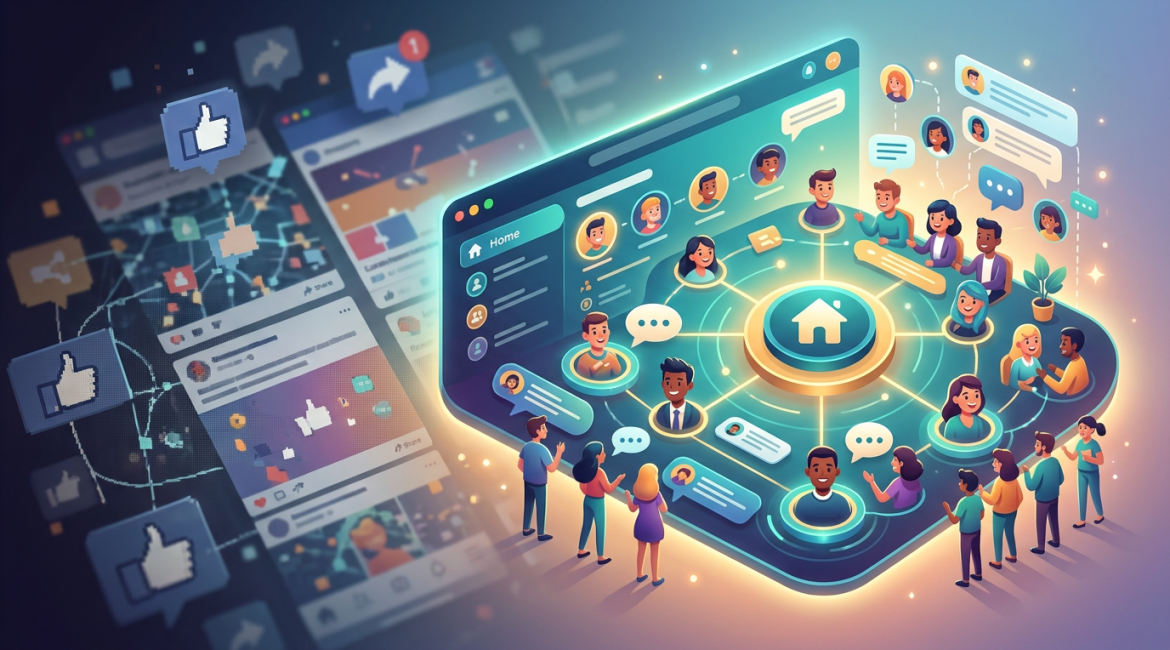
Owning your audience means maintaining direct access to your followers through platforms like Discord, email newsletters, and private community sites without interference from social media algorithms. This shift allows businesses to control their distribution, secure their revenue streams, and build deeper customer loyalty compared to the volatile nature of passive social media reach.
Why is social media reach declining for creators and businesses?
Social media reach is declining because platforms prioritize advertising revenue and “pay-to-play” models over organic content distribution. Most major networks now limit organic visibility to less than 5% of a brand’s total following, forcing creators to buy ads just to reach their existing audience.
When a business relies solely on social media, the platform owns the customer relationship. Changes to an algorithm or a sudden account suspension can result in a 100% loss of traffic overnight. This lack of stability has driven a massive migration toward independent models where the creator, not the platform, controls the connection.
What are the benefits of owning your audience?
Owning your audience provides guaranteed content delivery, higher conversion rates, and protection against platform censorship or technical changes. Email newsletters typically see open rates between 20% and 30%, which far exceeds the fractional engagement rates found on platforms like Instagram or X (formerly Twitter).
Direct ownership also facilitates better data collection. When a customer joins a private Discord or signs up for a newsletter, the business gains a direct line of communication—a phone number or email address—that remains portable. This portability ensures that if one service provider fails, the business can move its entire audience to a new platform without losing a single follower.
Key Advantages of Independent Community Models
- Direct Monetization: Businesses keep a higher percentage of revenue by avoiding “app store” taxes and platform-specific ad splits.
- Algorithm Independence: Content reaches the inbox or notification tray every time, rather than hoping for a favorable placement in a feed.
- High-Intent Engagement: Members of private communities are more likely to purchase products, as they have already committed to a deeper relationship.
- First-Party Data: Direct platforms allow brands to track user preferences and behavior without relying on third-party cookies.
How do platforms like Discord and Slack build community?
Discord and Slack build community by facilitating real-time, two-way conversations between a brand and its most dedicated supporters. These platforms shift the dynamic from “broadcasting to a crowd” to “conversing with a group,” which fosters a sense of belonging and brand advocacy.
In a private Discord server, businesses can segment their audience into specific channels based on interests or tier levels. This granularity allows for targeted product feedback, beta testing, and customer support that feels personal rather than transactional. Because these spaces are gated, they often suffer from less spam and toxicity than public comment sections, creating a safer environment for brand growth.
Why are newsletters considered the gold standard of direct ownership?
Newsletters are the gold standard because the email protocol is decentralized and not owned by any single corporation. If an email service provider increases their prices or changes their terms, a business can export their subscriber list as a CSV file and transition to a new provider in minutes.
The intimacy of the inbox is another factor. An email feels like a personal letter rather than a public post. High-performing newsletters often generate 10 to 40 times more revenue per subscriber than a social media follower. For businesses, this means that a list of 5,000 email subscribers is often more valuable than a social media following of 50,000.
How can a business transition from social media to a direct model?
A business transitions to a direct model by using social media as a “top-of-funnel” discovery tool to drive traffic to a lead magnet or community signup page. Instead of focusing on “likes,” the primary goal of every social post should be to convert the casual scroller into a permanent subscriber.
The most effective strategy involves offering a specific incentive, such as a free guide, a discount code, or exclusive access to a private forum. Once the user is in the owned ecosystem, the business should provide consistent, high-value content that justifies the space taken up in the user’s inbox or Discord notifications. Over time, the reliance on the social media algorithm fades, and the direct relationship becomes the primary driver of growth.
Frequently asked questions
What does it mean to “own your audience”?
Owning your audience means you have a direct way to contact your followers, such as an email list or a private community platform, without an algorithm acting as a gatekeeper. It ensures that you can reach your customers regardless of changes to social media platform rules or visibility.
Is social media still useful for businesses?
Social media remains highly useful for brand discovery and reaching new people who haven’t heard of your business yet. However, it should be treated as a discovery engine rather than a permanent home, with the ultimate goal being to move those followers into an owned channel.
Which platform is best for starting a direct community?
The best platform depends on your goals: email newsletters via Substack or Beehiiv are best for long-form content, while Discord or Slack are superior for real-time interaction. For most businesses, starting an email newsletter is the most reliable first step toward audience ownership due to its portability.
How often should I contact my owned audience?
Consistency is more important than frequency, but most successful creators contact their audience once or twice per week. The key is to provide enough value so that your messages are welcomed rather than viewed as spam, maintaining a balance between educational content and promotional offers.